

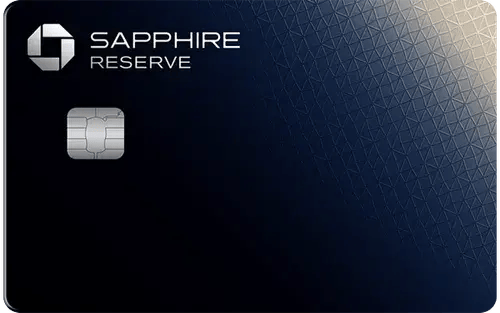
The Chase Sapphire Reserve is a premium credit card with premium benefits for frequent travelers. For the right person, it can deliver $2,000 to $3,000+ of value. However, the annual fee for this card is now $795, which means that it costs $700 more per year than the Chase Sapphire Preferred, a card that gives you access to the same Ultimate Rewards ecosystem, nearly the same transfer access, and the same $0 foreign transaction fees for only $95 a year.
Should you pick the Chase Sapphire Reserve over the Sapphire Preferred? There are tangible benefits to the Reserve: airport lounge access, credits and benefits Chase values at $3,000 a year, and stronger travel protections. Whether that's worth the higher annual fee depends entirely on how you travel and whether you will be able to use enough credits to offset the higher fee. We've created this Chase Sapphire Reserve review to help you look at the numbers and make the right decision for you.
Chase Sapphire Reserve Overview
The Chase Sapphire Reserve annual fee was raised in June 2025 from $550 to $795. At the same time, Chase overhauled the card's rewards, adding hundreds of dollars in credits for hotels, restaurants, and various subscriptions.
Signup Bonus: 100,000 points (after you spend $6,000 in purchases in the first 3 months from account opening)
Points: 8x points on all purchases through Chase Travel℠, including The Edit℠, 4x points on flights and hotels booked direct, 3x points on dining worldwide, and 1x points on all other purchases.
Note: Purchase amounts covered by the $300 annual travel credit, The Edit credit, or the $250 select hotel credit do not earn points.
Currently, there are also some bonus points categories. You earn 5x points on Lyft rides through September 2027 and 10x on eligible Peloton equipment over $150 through December 2027.
Credits: Chase values the Reserve's credits and benefits at $3,000 a year. The main ones:
- $300 annual travel credit (applies automatically to a wide range of travel purchases)
- $500 annually through The Edit (two $250 credits on qualifying two-night hotel stays)
- Up to $300 in Sapphire Reserve Exclusive Tables dining statement credits (up to $150 from January through June and again from July through December)
- Up to $250 in statement credits on prepaid Chase Travel hotel bookings of at least two nights at participating hotel brands in 2026
- Complimentary Apple TV and Apple Music subscriptions for a minimum of one year when activated by June 22, 2027 ($324 annual value)
- Up to $420 annually in DoorDash promos: one $15 monthly promo on a qualifying DoorDash order, plus two $10 monthly promos for eligible grocery, retail, and other orders. Complimentary DashPass membership is separate, valued at $120 annually. Activation required; benefits available through December 31, 2029.
- $300 in StubHub and viagogo credits
- $120 in Lyft credits ($10 per month)
- $120 in Peloton credits ($10 per month, through December 2027)
- A statement credit of up to $120 every four years as reimbursement for the Global Entry, TSA PreCheck®, or NEXUS application fee charged to your card
Lounge Access: Complimentary Priority Pass™ Select membership with access to over 1,300 airport lounges worldwide, plus access to every Chase Sapphire Lounge® by The Club with two guests.
Transfer Partners: Transfer access to 14 airline and hotel partners through Chase Ultimate Rewards, most at a 1:1 ratio. Airlines include United, Southwest, British Airways, Air Canada, Virgin Atlantic, Singapore, and Flying Blue. Hotels include Hyatt, Marriott, IHG, and Wyndham. Transfer partners are where the real point value lives, especially Hyatt.
Travel Protections: Primary rental car coverage up to $75,000. Trip cancellation and interruption up to $10,000 per traveler and $20,000 per trip. Trip delay reimbursement after 6 hours, up to $500 per traveler. Lost luggage up to $3,000. Emergency evacuation coverage up to $100,000.
Other Perks: IHG Platinum Elite status. Access to Points Boost on select flights and hotels through Chase Travel, which can push redemption value above 1 cent per point on rotating offers.
Recommended Credit Score: 750 to 850 (Excellent)
Is The Chase Sapphire Reserve Annual Fee Worth It?
Is Chase Sapphire Reserve worth it? Let's do the simple math first. The annual fee is $795. The $300 travel credit applies automatically to pretty much any travel purchase you make, including flights, hotels, rental cars, trains, taxis, ride-shares, and even campgrounds, so almost anyone who travels at all during the year will be able to capture it in full. That brings your real out-of-pocket cost down to $495.
Now, the real question becomes whether you can extract enough value from the other credits, the lounge access, and the travel protections to justify the remaining $495. This is where the card starts to split its audience. For a specific kind of traveler, the answer is a clear yes, and the math works well. For many people, though, it might not.
Chase advertises $3,000 in annual value across credits and other benefits. Here's how some of those benefits break down.
The Edit gives you $500 annually across two separate qualifying two-night hotel stays. If you already book a couple of weekend trips or one longer vacation each year, this credit slots right in. One thing to know: The Edit is a curated collection of specific hotels, not a free-choice credit. You'll need to book from the participating properties through Chase to trigger it, and the $500 splits into two $250 credits, so a single long trip only captures half. Users also report that The Edit hotels are generally on the more luxurious and expensive side.
Sapphire Reserve Exclusive Tables adds up to $300 more, with up to $150 in statement credits from January through June and again from July through December at participating restaurants in about 30 US cities. If you live in or travel to major metro areas, you may already eat at places that qualify. Worth checking the participating restaurant list for your city before you count on this one. If your city isn't well covered, this credit is harder to capture.
Then there’s the monthly stuff: up to $10 each month in Lyft credits, up to $10 each month in eligible Peloton membership credits, and up to $35 each month in DoorDash promos for DashPass members. DoorDash includes one $15 monthly promo on a qualifying order and two $10 monthly promos for eligible grocery, retail, and other orders. Together, these benefits offer up to $660 annually, separate from the complimentary DashPass membership, which requires activation by December 31, 2029. Your actual savings depend on which eligible services you already use and whether you redeem the benefits within their applicable windows. Terms apply.
Let's look at a realistic scenario, where you use some of these credits without actively going out of your way to optimize. You take 5 to 6 trips a year. You order DoorDash now and then. You already pay for Apple Music. You book one hotel stay a year that qualifies for The Edit and hit one or two Sapphire Reserve Exclusive Tables dinners. Here's what that looks like in captured credits:
- $300 travel credit captured in full
- $130 to $324 in Apple Music and/or Apple TV subscriptions
- $120 to $300 in DoorDash promos, assuming you redeem $10 to $25 per month on purchases you would otherwise make. Any savings from DashPass are additional and depend on your ordering habits.
- $250 from one Edit stay
- $150 from one Sapphire Reserve Exclusive Tables visit
- $60 to $120 in Lyft credits
In this example, the total comes to $1,010 to $1,444 in credits, promos, and subscription value, about $215 to $649 above the $795 annual fee before considering lounge access, travel protections, or earned points. This assumes you use the benefits on purchases and subscriptions you would otherwise pay for.
Now add lounge access. The Reserve includes Priority Pass Select membership plus access to Chase Sapphire Lounges. Chase itself values the combined lounge network at $850+ annually, based on the $469 cost of a Priority Pass Select membership plus four Chase Sapphire Lounge day passes at $100 each.
At Chase Sapphire Lounges, you can also bring two guests, which matters if you travel with a partner. The Chase Sapphire Lounges are currently located at a handful of major US airports, including JFK, LaGuardia, Boston, Philadelphia, Phoenix, San Diego, and Las Vegas, and they're generally newer and less crowded than Priority Pass options.
Travel protections are harder to put a number on until you need them. Primary rental car coverage alone saves $15 to $30 per day by letting you decline the rental company's insurance. For anyone who rents a car multiple times a year, that can be another few hundred dollars. Trip cancellation and interruption coverage runs up to $10,000 per traveler, which can pay for the card several times over if a trip is canceled or cut short for a covered reason.
Stack it all together, and a moderate traveler can capture $1,600 to $2,200 in real value without optimizing aggressively. Someone who uses lounges heavily and redeems points through transfer partners may be able to push past $3,000.
So yes, for the right person, the $795 Chase Sapphire Reserve annual fee is worth it, but you may have to put some work in to claim the right credits.
Who the Chase Sapphire Reserve Is Best For
The Reserve fits a specific kind of traveler. You're likely to get your money's worth if you recognize yourself in the profile below.
- You take 6 or more trips a year, and at least a few of them involve long flights or international travel
- You use airport lounges regularly, ideally 10 or more times a year
- You already spend money with brands in the credit stack, like DoorDash, Apple, or Lyft, or you stay at hotels often enough to hit The Edit credits
- You're comfortable activating credits and tracking monthly and semiannual windows
- You're open to learning how to transfer points to airline and hotel partners rather than redeeming for cash back
- You rent cars several times a year and want primary insurance coverage built in
The card isn't a fit for everyone. If you only travel once or twice a year, rarely use lounges, and don't currently spend at the partner brands, you're likely paying for benefits you won't fully use. Travelers who are new to rewards cards or who want simple points earning without the activation overhead are usually better off with a card that costs less and asks less of them.
One more consideration. If you already carry a premium card from another issuer like the Amex Platinum, some of the Reserve's benefits may overlap with what you're already getting. Lounge access in particular stacks up quickly when you carry multiple premium cards, and the marginal value of a second lounge membership is lower than the first.
Chase Sapphire Reserve vs Preferred: Which One Is Right for You?
Both the Chase Sapphire Reserve and Sapphire Preferred cards feed into the same Chase Ultimate Rewards ecosystem. You get access to the same 14 airline and hotel transfer partners, but they no longer transfer identically. The Reserve keeps the full 1:1 ratio to World of Hyatt, while the Preferred now transfers to Hyatt at 4:3 - meaning 1,000 points become 750 Hyatt points. Most other partners transfer at 1:1 on both cards. You earn 3x on dining on both, neither charges foreign transaction fees, and both include DashPass. So on the fundamentals they're close, but for Hyatt loyalists the Reserve now holds a real edge.
The Preferred has a short list of unique advantages. It earns 3x on online groceries (with some exclusions like Target, Walmart, and wholesale clubs), 3x on top streaming services, 3x on gas and EV charging, and 3x on vacation homes at top brands, none of which the Reserve offers. And of course, it costs $95 a year instead of $795.
The Reserve's advantages are longer, which is where the higher fee goes. Lounge access is the biggest one. Priority Pass Select and Chase Sapphire Lounge access, including two guests at Chase Sapphire Lounges, aren't available on the Preferred at all.
The credit stack is the other major differentiator. The Reserve offers The Edit and Sapphire Reserve Exclusive Tables credits, combined Apple TV and Apple Music subscriptions, StubHub credits, Lyft credits, Peloton membership credits, and larger DoorDash promos. The Preferred does include one complimentary year of Apple TV when activated by December 31, 2026. The Reserve also offers a $300 annual travel credit, compared to the Preferred’s $100 Chase Travel hotel credit.
On points earning, the Reserve pulls ahead on travel specifically. 8x through Chase Travel versus 5x. 4x on direct airline and hotel bookings versus 2x. Dining is a tie at 3x. One thing to keep in mind: purchase amounts covered by the Reserve's $300 annual travel credit, The Edit credit, or the $250 select hotel credit do not earn points. Travel protections favor the Reserve, too. Trip delay kicks in at 6 hours instead of 12, primary rental coverage runs up to $75,000 versus $60,000, and the Reserve adds emergency evacuation coverage up to $100,000 that the Preferred doesn't include.
What this comes down to is how you use cards. If you earn and redeem points without caring much about airport lounges or premium protections, the Preferred delivers almost all of the Reserve's underlying value at a fraction of the cost. If you want the lounges, the credit stack, and the stronger protections, and you'll actually use them, the Reserve makes sense. Neither card is objectively better; they just serve different users.
For a deeper look at what the Preferred offers on its own, see our Chase Sapphire Preferred review.
How to Maximize the Chase Sapphire Reserve
A card like this rewards intentional effort. A few practical moves can make the difference between getting your money's worth and leaving value on the table.
For the semiannual credits, a calendar reminder is your best friend. Sapphire Reserve Exclusive Tables and StubHub credits are split into January to June and July to December windows. Let a window close, and you've just left $150 on the table. The monthly Lyft, DoorDash, and Peloton credits work the same way. They don't roll over, so you can set up calendar reminders or recurring orders to make sure you take advantage of them.
When it comes to points, redeeming for cash gives you 1 cent per point. Transferring through Chase Ultimate Rewards to partners like Hyatt, United, or Virgin Atlantic can push that above 2 cents, sometimes even higher. Hyatt especially tends to deliver outsized value.
To activate the primary rental coverage, pay for the entire rental with your Reserve and decline the rental company's collision damage waiver. That alone can save $15 to $30 per day. For frequent renters, that adds up.
When you fly through an airport that has a Chase Sapphire Lounge, use that before defaulting to a Priority Pass option. The Chase Sapphire Lounges are often newer, less crowded, and noticeably better across the board.
Should You Get the Chase Sapphire Reserve?
The Chase Sapphire Reserve earns its $795 fee, but only for a specific kind of cardholder. If you travel often, use airport lounges regularly, and put in a little effort to activate the right credits throughout the year, the value is real. A moderately engaged traveler can pull $2,000 or more in value out of the card each year. A frequent traveler who leans on lounge access and transfer partners can push that well past $3,000.
For anyone who doesn't fit that profile, the Chase Sapphire Preferred is almost certainly the smarter starting point. You get the same Ultimate Rewards ecosystem, nearly the same transfer access, the same dining earn rate, and the same $0 foreign transaction fees for $95 a year. That covers most of what the Reserve does well, minus the lounges and the credit stack you might not use anyway.
Ready to take a closer look? Find current offer details and eligibility information on the Chase Sapphire Reserve card page.