

Introduction
Travel rewards cards tend to fall into two extremes. You either get a no-annual-fee card that barely makes a difference, or a premium card loaded with perks you never fully use and regret opening. It doesn't have to be this way.
Most people don’t need either of those because they actually need something in the middle. A card that turns everyday spending into real travel without requiring a high annual fee or a complicated strategy to get the best value out of it.
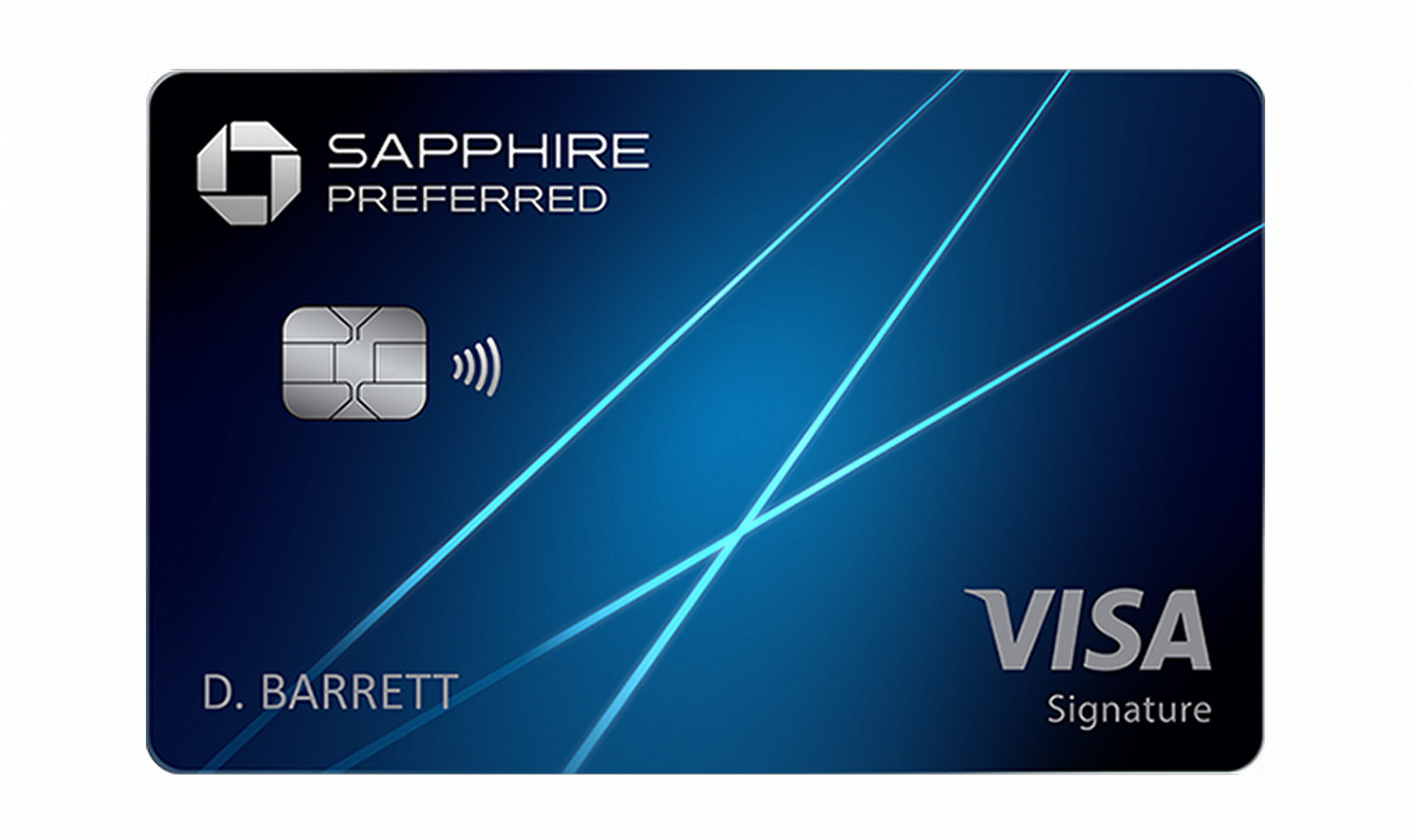
The Chase Sapphire Preferred® Card has quietly done exactly that for years. It isn’t the flashiest option on the market, and it doesn’t need to be.
What it offers instead is a balance that is increasingly rare in travel rewards: strong earning on common spending categories, flexible redemption options, and a price point that doesn’t require you to scramble to “break even” just to feel good about keeping the card.
In this review, I’ll break down where the Sapphire Preferred actually delivers, where it requires a bit more strategy, and how to decide if it deserves a spot in your wallet.
Getting right down to it: Is the $95 annual fee worth it?
At $95 per year the Chase Sapphire Preferred sits in a part of the market that could be easy to overlook. It’s not free, but it also doesn’t come with the kind of price tag that forces you to actively manage credits just to justify keeping it.
Cards at this price point tend to live or die on whether the value shows up without extra effort, and that’s where this one holds up well.
For most people, the question isn’t whether the fee can be offset on paper. It’s whether the value shows up naturally in the way they already spend.
A great example is the $100 annual hotel credit offered for bookings made through Chase Travel. If you book even one hotel stay a year through the portal, that immediately reduces the effective cost of holding the card.
From there, the value comes from how the card fits into everyday spending. Dining, travel, and a handful of recurring categories are where many people already spend consistently. Instead of requiring a complex setup, the Sapphire Preferred allows you to earn meaningful rewards in those areas without much effort.
There is one detail that’s easy to miss, but important to understand:
When booking through Chase Travel, note that the card includes a $100 annual hotel credit applied to eligible hotel stays. This credit applies automatically and does not affect point earning on travel purchases.
In practice, the Sapphire Preferred doesn’t rely on a single oversized perk to justify its cost. It spreads value across everyday spending and flexible redemption, which tends to be a more sustainable approach for most travelers.
A welcome bonus that can actually pay for a trip
The current welcome offer is 100,000 points after spending $5,000 in the first three months. That’s a higher threshold than some entry-level cards, but the payoff is in a different category entirely.
What I mean by that is that, at baseline, those points are worth $1,000 when redeemed through Chase Travel. That alone more than offsets the annual fee in the first year. But that value isn't the only reason this bonus stands out.
Where it gets more interesting is how flexible those points are. Because they can be transferred to airline and hotel partners, the same 100,000 points can go significantly further depending on how you use them. A few nights at a well-priced hotel or a round-trip flight booked strategically can easily push the value beyond what you’d get from a simple cash-back redemption.
This is where the Sapphire Preferred separates itself from simpler rewards cards. You’re not just earning a fixed rebate on your spending. You’re earning points that have multiple ways of being used, with a higher ceiling if you’re willing to be even slightly intentional about it.
In my experience, this is where most of the outsized value from travel cards actually comes in.
The $5,000 spending requirement is worth taking seriously, but it’s also manageable if you treat the card as your primary payment method early on. Everyday expenses like groceries, bills, and dining can get you there quickly without forcing unnecessary purchases.
In practical terms, the welcome bonus does most of the heavy lifting in year one. It gives you a large pool of points upfront, which makes it much easier to see real value from the card early instead of waiting months or years for rewards to build.
How this card earns in the real world
Where this card makes the most sense is in how it earns over time. It doesn’t try to win you on niche categories. Instead, it focuses on the reliable spending that shows up week after week.
In practice, the bulk of your points will come from a small handful of areas:
- 5x points on travel booked through Chase TravelSM
- 3x points on dining, including takeout and delivery
- 3x points on vacation homes (Airbnb, Vrbo, and similar)
- 3x points on gas and EV charging
- 3x points on select streaming services
- 3x points on online groceries (excluding Walmart, Target, and wholesale clubs)
- 2x points on all other travel
- 1x on everything else
There are cards that offer higher rates in very specific categories, sure, but most people aren’t optimizing for edge cases. They’re spending often on food, subscriptions, and travel. That’s where this card is perfectly positioned in my opinion.
Dining does a good bit of the work. A few meals out each week, plus the occasional delivery order, adds up faster than people expect. Streaming and online grocery purchases fill in the gaps, capturing spending that can easily go unrewarded on other cards.
The travel category is where things get slightly more nuanced.
Booking through Chase Travel unlocks the highest earning rate on travel. It's worth noting that the $100 annual hotel credit mentioned earlier applies automatically to eligible hotel stays booked through the portal — no activation needed.
What this all ultimately comes down to is consistency. The card earns well in a handful of categories that most people already spend in, and over time, that tends to outperform cards that look better on paper but don’t align with how people actually use them.
Where your points will become the most valuable
This is where the Sapphire Preferred separates itself from simpler cash back cards.
At a basic level, your points can be redeemed for cash, gift cards, or travel. That flexibility is useful, but keep in mind that the value isn’t the same across the board. If you redeem for cash back, points are typically worth about one cent each. It’s straightforward, and a nice option, but it also severely limits what you’re getting from the card.
Value can improve through Chase Travel's Points Boost feature, which offers elevated redemption rates on select flights and hotels — up to 1.5 cents per point on eligible hotels and 1.75 cents on eligible flights. Outside those offers, portal redemptions are worth the same one cent as cash, so the real premium shows up on boosted bookings rather than every booking.
The real upside comes from transfer partners. Points transfer to airline and hotel loyalty programs like United MileagePlus and Southwest Rapid Rewards at a 1:1 ratio, with World of Hyatt transferring at 4:3.
And this is where the value gap opens up. A hotel stay or flight that might cost several hundred dollars in cash can sometimes be booked for fewer points through a partner program. The exact value depends on timing and availability, but it is often meaningfully higher than a standard cash redemption.
You do not need to approach this card like a full-time job to benefit from it, either. Even using one or two transfer partners occasionally can improve the value you get from your points over time.
The takeaway here is quite simple, really. This card is built around travel. The more you lean into that, the more value you are likely to see and experience.
How to get more out of this card without overthinking it
The Sapphire Preferred works well on its own, but it becomes more effective when you treat it as part of a simple setup rather than a standalone card.
A common approach is pairing it with a no annual fee card like the Chase Freedom Unlimited® credit card. That card earns more on general purchases, which helps fill in the gap where the Sapphire Preferred earns one point per dollar.
The setup is straightforward. Use the Sapphire Preferred for dining, travel, and bonus categories, and use the Freedom Unlimited for everything else. Points can then be combined into one Ultimate Rewards balance and redeemed through the Sapphire Preferred.
This matters because it changes what those points can do. Instead of being limited to cash back value, they can be used for travel or transferred to partners, which increases their potential value.
Even without pairing another card, a few habits make a noticeable difference over time:
- Use the card consistently for dining and travel
- Book through Chase Travel when pricing is comparable
- Redeem points for travel instead of cash back
You do not need to track every category or optimize every purchase. Remember, most of the value comes from using this card intentionally in a few areas and staying consistent overall.
Like having extra travel protections? Great news
The rewards are what get all the attention, but the built-in protections are part of what makes this a practical travel card you’ll end up reaching for again and again.
One of the most useful benefits is primary rental car insurance. When you pay for a rental with the card and decline the rental company’s coverage, you are still covered without involving your personal auto insurance first. That can help avoid additional costs and complications.
The Sapphire Preferred also includes trip delay reimbursement, which can help cover expenses like meals or lodging if your travel is significantly delayed. This is the kind of benefit that doesn’t matter until you need it, but when you do, it can mean the difference between an entire trip wasted or still enjoyed.
Other protections include trip cancellation and interruption coverage, along with baggage delay insurance. These are not benefits you’ll need to rely on for every trip, but they provide amazing financial buffers that can offset those unexpected costs that can add up quickly.
Taken together, these features add a layer of reliability that goes beyond earning points. For frequent travelers, that added coverage is part of the long term value that allows you to continue to enjoy what you love doing most: traveling.
Why this card fits the way most people actually travel
The Chase Sapphire Preferred Card continues to stand out for a simple reason: it aligns well with how most people actually spend and travel.
It does not rely on a long list of credits or complicated perks to justify its annual fee. Instead, it delivers value through consistent earning in relevant categories, flexible redemption options, and a rewards system that becomes more valuable over time.
The welcome bonus provides a strong starting point, but the longer term appeal comes from how easy it is to keep earning and using points without changing your behavior.
There are cards with higher fees and more features, of course. There are also simpler options that focus only on cash back. This is true. But the Sapphire Preferred card sits between those two extremes in a way that feels perfectly practical rather than limiting.
It's the reason so many Chase customers have had it in their wallets for years and don't plan on letting go of it anytime soon.
For anyone who travels a few times a year (or more), spends regularly on dining, and wants rewards that are flexible without being uber complicated, it remains one of the more balanced options available. See if it’s a fit for your needs, traveler.
Editorial Disclosure: Greensprout may receive compensation from partners whose products are featured on this page. This compensation may impact how and where products appear, including the order in which they appear. However, our editorial opinions and recommendations are independent and based on our own research and evaluation. Not all financial companies or offers available in the marketplace are included.