
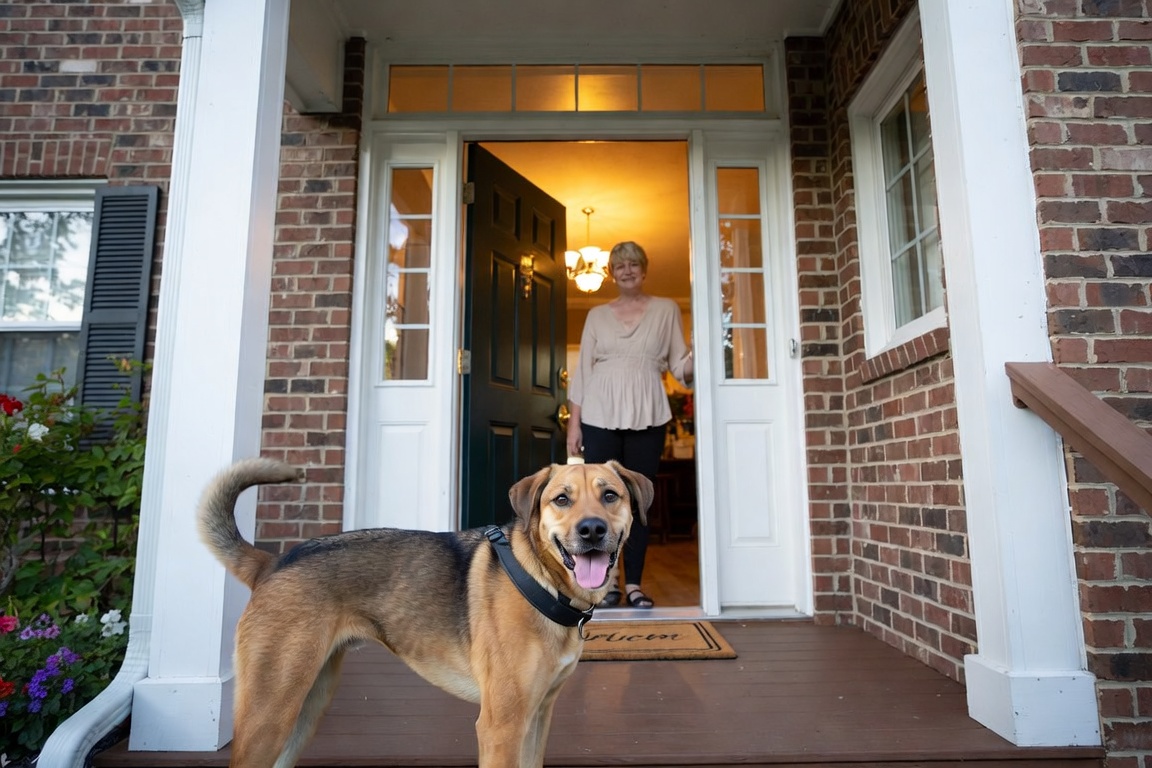
What Coverage E actually does, why the default limit is rarely enough, and how to size it to your real financial exposure
Key takeaways
- Personal liability coverage (Coverage E) pays your legal defense, settlements, and judgments when a third party holds you responsible for bodily injury or property damage.
- The default $100,000 limit falls short in many 2026 claim scenarios. Raising to $300,000 to $500,000 typically costs $10 to $75 more per year.
- Set your liability limit at or above your net worth: home equity, savings, retirement accounts, and investments combined.
- Dog bites, slip and fall injuries, and property damage caused by household members are the most common claim triggers. None require unusual circumstances.
- Coverage E excludes intentional acts, business activities from home, vehicle accidents, and injuries to household members.
- If your net worth exceeds your homeowners policy limits, a personal umbrella policy provides $1 million to $5 million in additional coverage for $150 to $350 per year.
When it comes to home insurance, homeowners spend most of their time thinking about what their insurance covers for the house itself including the roof, the walls, and the belongings inside. The liability section of the policy gets far less attention, partly because it never comes up in normal times, and partly because it can feel abstract.
Until someone gets hurt on your property and you get served with a lawsuit.
Personal liability coverage, listed as Coverage E on your homeowners policy, is the part that pays when someone holds you legally responsible for an injury or property damage. It covers your legal defense costs. It pays settlements and judgments up to your policy limit. And it follows you beyond your property line, not just incidents that happen at home.
The default coverage limit on most policies is $100,000. In 2026, that number is difficult to defend as adequate protection for a homeowner with substantial assets, a mortgage, retirement savings, or anything else worth protecting.
What personal liability coverage actually does
Coverage E is triggered when a third party suffers bodily injury or property damage that you or a household member caused accidentally, and they pursue you for compensation.
The coverage handles three things:
- Legal defense: Your insurer hires an attorney and covers their fees, even if you are never found liable.
- Settlement costs: If you and the injured party agree to a settlement, the coverage pays it up to your limit.
- Court judgments: If a jury rules against you, the coverage pays the judgment up to your limit.
Coverage F, listed separately as Medical Payments to Others, works alongside Coverage E but operates differently. It pays the medical bills of someone hurt on your property regardless of fault, without requiring a lawsuit. Standard limits are $1,000 to $5,000. The purpose is to handle small incidents quickly and prevent them from escalating into claims(2).
Coverage E is where the real protection sits. Coverage F handles a neighbor who twists an ankle on your porch step. Coverage E handles the same neighbor six months later, after reconstructive surgery and a lawyer.
Coverage E pays your legal defense even if you win. Even if the lawsuit is frivolous, attorney fees, court costs, and your time are real costs. Without coverage, you absorb them.
The scenarios that actually trigger liability claims
Personal liability claims are not rare. They arise from the ordinary conditions of owning a home, having guests, and living in close proximity to neighbors. The three most common categories account for the majority of residential liability losses.
Dog bites
U.S. homeowners insurers paid $1.86 billion in dog bite and dog-related injury claims in 2025, across 28,450 claims.
The volume has climbed 57% over the past decade. The cost per claim has risen 209% since 2016(3). This is not a fringe risk for dog owners. It is a high-probability liability exposure with a claim cost that typically exceeds the default $100,000 policy limit in states like New York and California.
Slip and fall injuries
Slip and fall is the most common premises liability category. Nationally, roughly 1.1 million slip and fall claims are filed annually, with approximately 27% involving residential properties. Average nationwide settlements run $48,700(4).
Minor injuries settle in the $5,000 to $25,000 range. Fractures often run $35,000 to $85,000. Surgical cases regularly exceed $100,000. Severe injuries involving spinal damage or permanent disability can reach $500,000 to $5 million or more(4).
An icy walkway, a cracked step, an uneven patio edge. These are not unusual conditions.
Children and household members
Your liability coverage extends to family members living with you, including children. If your teenager damages a neighbor's property, your Coverage E responds. If your child injures someone during a neighborhood activity, your policy is involved. The coverage does not limit itself to incidents that happen on your land(2).
Common liability scenarios and typical cost ranges
Scenario |
Typical cost range |
Coverage E responds? |
|---|---|---|
Dog bite (national avg) |
$65,450 per claim (2025) |
Yes, up to your policy limit |
Slip and fall, minor injury |
$5,000 to $25,000 |
Yes |
Slip and fall, fracture or surgery |
$50,000 to $300,000+ |
Yes, up to your policy limit |
Slip and fall, permanent disability |
$200,000 to $2M+ |
Yes, up to your policy limit |
Child damages neighbor property |
$500 to $10,000+ |
Yes |
Guest injured at home, medical only |
$1,000 to $5,000 |
Coverage F (no-fault) |
Home-based business client injury |
Varies |
No, excluded |
Car accident in driveway |
Varies |
No, auto insurance applies |
Why $100,000 is usually not enough
Personal liability coverage is included in home insurance policies. It covers medical and legal costs after accidents or property damage, but coverage is limited(1).
The default personal liability limit on most homeowners policies is $100,000. That limit was reasonable in a different era of medical costs and legal settlements. It is not adequate for most homeowners in 2026(5).
A moderately serious slip and fall can push $150,000 after surgery, rehab, and lost wages. A single case that goes to trial in a state with high jury awards can reach seven figures. Against any of those outcomes, a $100,000 limit means your personal assets pay for the rest(4).
The standard recommendation from insurance industry sources for asset protection is $300,000 as a baseline(5). But more precise guidance endorsed by MoneyGeek and others, is to set your liability limit at a minimum equal to your net worth. This includes your home equity, savings, retirement accounts, and investments combined(2).
If you have $400,000 in assets, carry at least $400,000 in liability coverage. If a judgment exceeds your limit, the difference comes from your pocket, not your insurer's.
The cost to increase that limit is almost negligible relative to the risk exposure it covers. Raising coverage from $100,000 to $300,000 typically adds $10 to $40 per year to your premium.
Going from $100,000 to$500,000 usually adds $30 to $75 per year(5). That is less than $7 per month for coverage that could protect hundreds of thousands of dollars in assets.
Approximate annual premium increase to raise personal liability limits
Liability limit |
Typical annual premium increase (homeowners) |
|---|---|
$100,000 (default) |
Included in base premium |
$300,000 |
+$10 to $40/year |
$500,000 |
+$30 to $75/year |
$1,000,000 (via umbrella policy) |
+$150 to $300/year for separate policy |
Source: Coverage Cat, 2025/2026 carrier data (5).
What Coverage E does not cover
Understanding the exclusions is as important as understanding what the coverage provides. Four situations fall outside the scope of personal liability coverage on a standard homeowners policy.
Intentional acts
If you or a household member deliberately causes harm or property damage, Coverage E does not apply. The coverage is built around accidents, not willful conduct. This exclusion holds regardless of who in the household caused the harm(2).
Business activities
If you run a business from your home and a client is injured on the premises, your standard homeowners policy typically excludes that claim. ISO policy language excludes liability arising from business activities conducted from a residential location, whether or not the business is owned or operated by the insured. This includes side work, part-time businesses, and occasional income-generating activities(6).
Home-based business exposure requires either a home business endorsement or a separate commercial policy. If you have customers visiting your home, or any income-generating activity tied to the property, this gap deserves attention.
Vehicle accidents
Accidents involving motor vehicles are handled by your auto insurance policy, not your homeowners policy. If a car accident occurs in your driveway and involves your vehicle, Coverage E is not the relevant coverage.
Injuries to household members
Coverage E does not cover bodily injury to people who live in your home. Injuries to family members fall under your health insurance, not your homeowners liability(2).
What happens to your premium after a liability claim
Filing a personal liability claim triggers one of the higher rate increases across all claim types. The Zebra reports you can expect your premium to rise at least 20% after a liability claim is settled, regardless of whether you won(7).
Rate increases after a claim typically persist for three to seven years, depending on your insurer and state. Some states have consumer protections that limit increases after certain claim types, but liability claims are rarely among the protected categories.
A $354 annual premium increase held for five years adds $1,770 to your total insurance costs, on top of any out-of-pocket expenses from the claim itself. Carrying adequate limits from the start is cheaper than absorbing both the judgment gap and the rate hike.
When to consider umbrella insurance
Your homeowners policy can typically be written with up to $500,000 in personal liability coverage, and some insurers go to $1,000,000. If your net worth exceeds what your homeowners policy can cover, or if you have elevated liability exposures, an umbrella policy is the next layer of protection.
A personal umbrella policy provides $1 million to $5 million in additional liability coverage above your homeowners and auto policy limits. It activates after your underlying coverage is exhausted. It also extends to situations not covered by your standard policies, including libel and slander claims, which homeowners policies typically exclude(8).
The cost in 2026 is $150 to $350 per year for the first $1 million. Each additional million adds approximately $75 to $100 per year. A $2 million umbrella typically runs $230 to $520 per year total(8).
Most umbrella carriers require a minimum of $300,000 in homeowners liability and 100/300/100 in auto liability before they will issue a policy. That means bumping your homeowners limit to $300,000 first is often a practical prerequisite, not just a good idea on its own(8).
Umbrella insurance: coverage vs. annual cost (2026)
Umbrella coverage limit |
Typical annual premium |
Suggested net worth range |
|---|---|---|
$1 million |
$150 to $350/year |
$250,000 to $500,000 |
$2 million |
$230 to $520/year |
$500,000 to $1,000,000 |
$3 million |
$310 to $680/year |
$1,000,000 to $2,000,000 |
$5 million |
$470 to $1,000/year |
$2,000,000+ |
Source: Galchaebi Umbrella Insurance Policy Guide 2026, carrier data (8).
What many homeowners get wrong about liability coverage
Assuming the default limit is sufficient
The $100,000 default that most policies ship with was calibrated for a different cost environment. Medical inflation, higher jury awards, and increasing litigation rates have all moved in one direction over the past decade. The default limit is a starting point, not a recommendation.
Overlooking off-property coverage
Many homeowners assume Coverage E only applies to incidents that happen at their home. It does not. Personal liability coverage follows you to other locations. If your child injures someone at school, if you accidentally damage a neighbor's property while visiting, or if your dog bites someone during a walk, Coverage E is the applicable coverage(1)(2).
Conflating Coverage E and Coverage F
Coverage F (Medical Payments) and Coverage E (Personal Liability) serve different purposes. Coverage F is a no-fault, low-limit goodwill payment that bypasses the legal process entirely. Coverage E is the one that matters when a claim becomes a lawsuit. Homeowners sometimes assume Coverage F handles serious claims. It does not(2).
Liability coverage is the part of your homeowners policy you hope you never need, but the one that protects everything else you have built if you do. The cost to carry adequate limits is low. The cost of carrying inadequate limits, if a serious claim lands, is not. A quick review of your current Coverage E limit takes five minutes and costs nothing. If that number is still at $100,000, it is worth a conversation with your insurer.
About the Author
The Greensprout Editorial Team covers insurance, mortgage, and personal finance topics for adults navigating the financial decisions of the second half of their lives. Content is reviewed for accuracy and written to reflect current market conditions.
Editorial Independence
Greensprout's editorial team writes on behalf of the reader. Our goal is to provide clear, useful information to help you make better financial decisions. Our editorial content is not influenced by advertiser relationships.
Affiliate Disclosure
Greensprout is an independent, advertising-supported publisher and comparison resource. We may earn compensation when you click on links to products from our partners. This does not affect our editorial standards or recommendations.
References
1. Quote.com — "Personal Liability Insurance (2026 Coverage Guide)" — https://www.quote.com/home-insurance/personal-liability/
2. MoneyGeek — "What Is Personal Liability in Homeowners Insurance? (2026)" — https://www.moneygeek.com/insurance/homeowners/personal-liability-homeowners-insurance/
3. DogsBite.org — "Quick Statistics: U.S. Dog Bite Statistics" — cites Insurance Information Institute / State Farm 2025 data — https://www.dogsbite.org/dog-bite-statistics-quick-statistics.php
4. Sponsor License Lawyers — "Slip and Fall Settlements: Actual Payout Amounts in All 50 States" (February 2026) — https://sponsorlicenselawyers.co.uk/slip-and-fall-settlements-2026/
5. Coverage Cat — "Homeowners Personal Liability Insurance 2026: Coverage, Limits & Cost Guide" — https://www.coveragecat.com/blog/homeowners-personal-liability-insurance-coverage-limits-cost-guide
6. Gary Marshall Insurance Agency — "Do you run a business out of your home? Are you covered?" (February 2026) — http://www.garymarshallagency.com/blog/2026/2/4/do-you-run-a-business-out-of-your-home-are-you-covered
7. The Zebra — "Personal Liability Insurance Coverage: a Guide" (January 2026) — https://www.thezebra.com/homeowners-insurance/coverage/personal-liability-insurance/
8. Galchaebi — "Umbrella Insurance Policy 2026: When $1M of Extra Liability Protection Makes Sense" (April 2026) — https://galchaebi.com/blog/umbrella-insurance-policy-2026/