

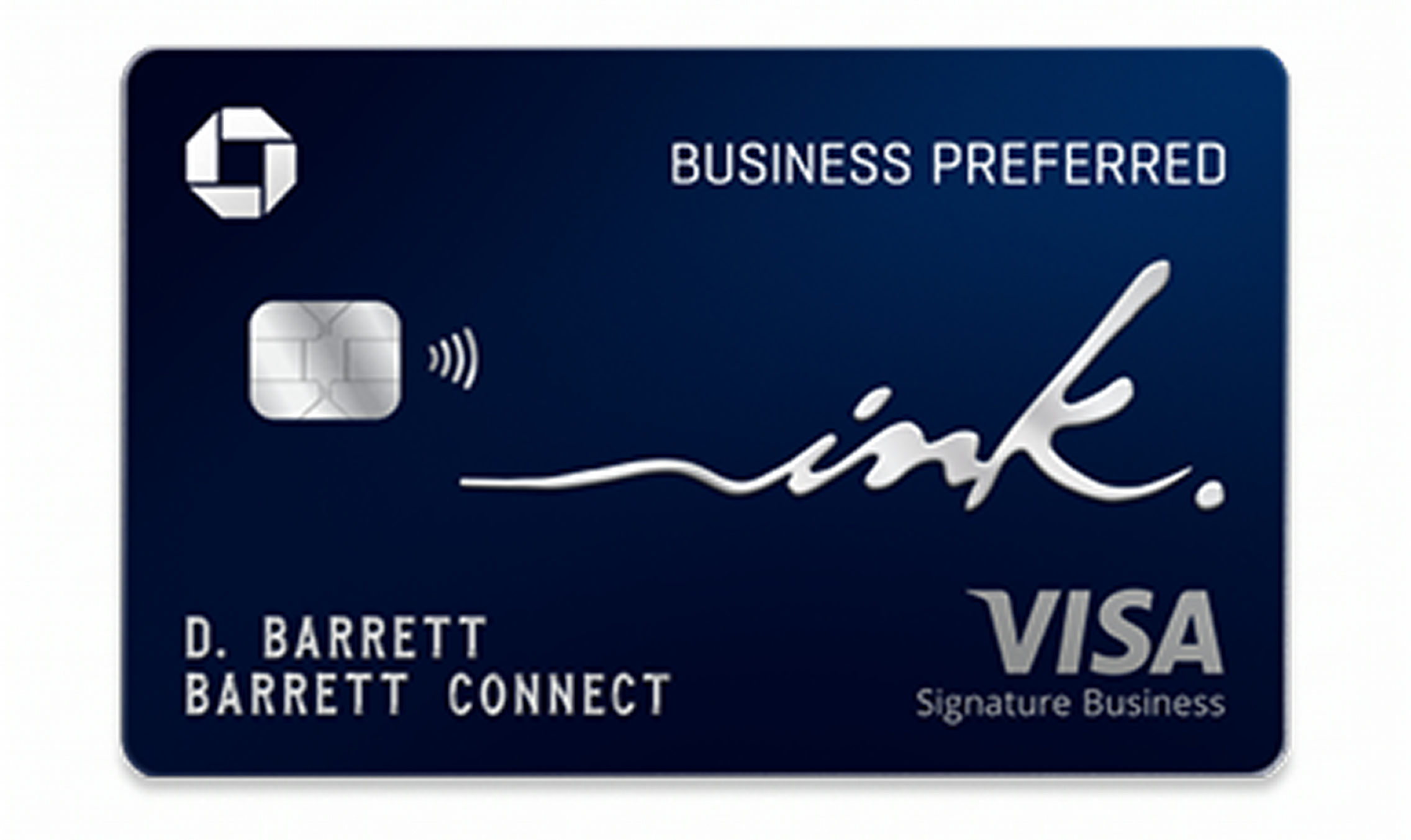
The Chase Ink Business Preferred® Credit Card is one of the few business rewards cards built with advertising as a primary earning category, making it particularly valuable for businesses that run consistent paid ads. Much of the card's value comes from its 3x rewards rate on social media and search engine advertising.
The 3x rate applies to the first $150,000 in combined bonus-category spend per account anniversary year, including shipping, travel, and internet, cable, and phone services. At moderate to high ad budgets, this translates into significant rewards that can be redeemed for cash back, travel, or transferred to airline and hotel partners. The card also comes with a strong set of travel and purchase protections and a compelling welcome bonus.
Here's a closer look at what makes this card worth considering for businesses that consistently spend on advertising.
Chase Ink Business Preferred® Credit Card Overview
- Annual fee: $95
- Rewards Rate: Earn 3x points on travel, shipping, internet/cable/phone, and advertising on social media and search engines, up to $150k/year combined; 1x points on all other purchases.
- Welcome Bonus: Earn 100,000 bonus points after you spend $8,000 on purchases in the first three months from account opening.
- Foreign Transaction Fee: $0
- Intro APR: N/A
- Regular APR: 17.74% - 26.74% Variable APR
Why Ink Business Preferred Is Built for Ad Spend
The Ink Business Preferred earns 3x points on advertising purchases made through social media sites and search engines, up to $150,000 in combined bonus-category purchases each account anniversary year. To qualify, ad spend must be billed directly to the card by the platform. The Ink Business Preferred is one of the stronger options available for businesses with meaningful ad spend.
It is worth noting that the cap applies to all bonus categories combined, including shipping, travel, and internet, cable, and phone services. It resets annually on your account anniversary date.
At $12,500 per month in combined bonus category spend, you'll reach the cap in 12 months. At $15,000 per month, you'll reach it in 10 months. At $20,000 per month, you'll reach it around month 7 or 8. Once the $150,000 threshold is crossed, the rate drops to 1x for the remainder of that anniversary year.
What Your Monthly Ad Spend Earns
Here are a couple of examples of monthly advertising budgets to show the Chase Ink Business Preferred's rewards-earning potential.
$10,000 per month on Meta and Google
- Annual ad spend: $120,000
- Points earned at 3x: 360,000
- Value redeemed for cash back: $3,600
- Annual fee: $95
- Cash back redemption net return: $3,505
At this monthly spending level, you would stay under the $150,000 combined cap for the full year. The 3x rate would apply to every dollar spent.
$20,000 per month across Meta, Google, and TikTok
- Annual ad spend: $240,000
- 3x applies to the first $150,000: 450,000 points
- 1x applies to the remaining $90,000: 90,000 points
- Total points: 540,000
- Cash back redemption: $5,400
- Annual fee: $95
- Cash back redemption net return: $5,305
At this monthly spending level, the cap becomes a factor. You would reach $150,000 around month 7 or 8, and the remaining spend would earn at 1x. If you wanted to continue earning a higher rate on advertising expenses beyond the cap, you would need a second card that also earns a bonus rate on advertising spend.
Turning Ad Spend Into a Lower Customer Acquisition Cost
Customer acquisition cost, or CAC, is the total amount a business spends to acquire one paying customer. For businesses running paid ads, ad spend is typically the largest variable in the calculation. Earning rewards on ad spend reduces the effective cost per acquisition, since the rewards come back as real dollars applied against the business.
For example, if your business spends $15,000 per month on Meta and Google at a $90 CAC, you are acquiring roughly 167 customers per month. At 3x points on the monthly spend, you earn 45,000 points, worth $450 in cash back. Spread across 167 customers, that is roughly $2.69 back per acquisition, bringing the effective CAC down to about $87.31. The improvement is modest but consistent. Unlike campaign optimizations, it requires no testing, no creative revisions, and no adjustments to targeting.
Welcome Bonus
The Ink Business Preferred currently offers one of the more compelling welcome bonuses among business credit cards.
New cardmembers can earn 100,000 bonus points after spending $8,000 on purchases in the first three months from account opening.
At 1 cent per point, that is $1,000 in cash back or statement credit. Points can also be transferred to airline or hotel partners at a 1:1 ratio, with the value varying depending on how you redeem.
For an advertising-driven business, $8,000 in three months is not a stretch. A business running $3,000 to $4,000 per month on Meta and Google can hit that threshold on ad spend alone in the first two months. The $95 annual fee is more than offset by the welcome bonus alone.
It's an attractive bonus offer; however, it may not be available if you have previously held this card. Business-related factors may also be considered when determining eligibility.
Redemption Options
Chase Ultimate Rewards points earned on the Ink Business Preferred can be redeemed in several ways, giving cardholders flexibility in how they use their rewards.
For most business owners, cash back or statement credit at 1 cent per point is the most practical option. It is straightforward, easy to track, and applies directly to your balance.
Points can also be redeemed for travel through Chase Travel at the same 1 cent per point value, or transferred to airline and hotel partners at a 1:1 ratio, including United, Southwest, Hyatt, and Marriott. For business owners who travel frequently, transferring points to partners may yield greater value, depending on the partner and how points are redeemed.
If your business also uses the Ink Business Cash® Credit Card or the Ink Business Unlimited® Credit Card, pairing them with the Ink Business Preferred converts those cards' cash back into transferable Ultimate Rewards points. Eligible Chase cards can also be combined into a single Ultimate Rewards balance, increasing the redemption value across your entire Chase card setup.
Key Features
The Ink Business Preferred comes with several valuable features and benefits beyond earning rewards.
Employee cards: Adding employees to the account costs nothing. You can set individual spending limits for each employee card, and all rewards earned are credited to the same account.
No foreign transaction fees: Purchases made outside the U.S. are not subject to foreign transaction fees, which benefits businesses with international ad platforms, overseas vendors, or owners who travel abroad for work.
Cell phone protection: When you pay your monthly cell phone bill with the card, you are covered for up to $1,000 per claim against covered theft or damage. The maximum is three claims in a 12-month period, with a $100 deductible per claim.
Trip cancellation and interruption insurance: If a trip is canceled or cut short by a covered reason, you can be reimbursed up to $5,000 per covered traveler and $10,000 per trip for prepaid, non-refundable travel expenses.
Auto rental coverage: Business car rentals charged to the card are covered up to $60,000 for theft and collision damage on most vehicles. To activate coverage, charge the full rental to the card and decline the rental company's collision damage waiver.
Purchase protections: Eligible purchases made with the card are protected against damage or theft for 120 days, up to $10,000 per item. Additionally, card purchases with eligible manufacturer warranties of three years or less are extended by one additional year.
Travel protections: For trips booked with the card, baggage delayed more than six hours is reimbursed up to $100 per day for up to three days, and lost or damaged luggage is covered up to $3,000 per covered traveler per trip.
Partner benefits: Cardholders earn 5x total points on Lyft rides through September 30, 2027. Complimentary DashPass access is also included for a minimum of one year when activated by December 31, 2027, with $0 delivery fees and reduced service fees on eligible orders.
Who This Card Is Best For
The Ink Business Preferred delivers the most value to businesses with consistent, meaningful spend in its bonus categories, particularly advertising. The Ink Business Preferred card works well for a range of businesses, but it is especially valuable in the following scenarios.
Established businesses and LLCs running paid ads: Businesses running consistent paid ads on Meta, Google, TikTok, LinkedIn, or Microsoft Advertising earn 3x points on every dollar of it, up to $150,000 in combined annual spend. The bigger the budget, the more the card returns.
Agencies billing ad spend through their own accounts: Agencies running client campaigns through their own card, rather than the client's, earn 3x points on the combined media budget across all accounts. For agencies managing multiple clients, the potential rewards scale significantly.
Founders and business owners who travel for business: In addition to advertising, Ink Business Preferred earns 3x points on travel. The card also comes with a solid set of protections, including trip cancellation insurance, primary auto rental coverage, and cell phone protection.
Businesses with teams making purchases: If your employees make regular company purchases, employee cards are available at no additional cost. Individual spending limits can be set for each card, and all purchases earn rewards under a single account.
Businesses already in the Chase ecosystem: If you are already using Ink Business Cash® Credit Card or Ink Business Unlimited cards, pairing them with the Ink Business Preferred Card converts those cards' cash back into transferable Ultimate Rewards® points and increases the value of every dollar earned across your Chase setup.
When This Card May Not Be the Best Fit
The Ink Business Preferred is a strong card for the right business, but it is not the right fit for everyone. Here are some scenarios when a different card may be a better fit for your business.
Low or inconsistent ad spend: If your monthly ad budget is under $2,000 to $3,000, the points earned at 3x may not be enough to justify the $95 annual fee compared to a no-fee flat-rate cash back card.
Agencies where client cards are on file: If ad spend runs through client cards rather than your own, unfortunately, you won't be able to take advantage of the card's 3x rewards rate. In that case, a card suited to your business spending habits may be a more practical option.
Spend concentrated outside the bonus categories: If the bulk of your business expenses are payroll, inventory, or software subscriptions, a competitive flat-rate card will likely serve you better. Outside the bonus categories, the Ink Business Preferred only earns 1x points per dollar spent.
Very high advertising spend: For businesses consistently spending well over $150,000 per year on advertising alone, the 3x rewards rate no longer applies once the combined spending cap is reached. For businesses with larger advertising budgets, a premium card with an uncapped advertising multiplier like The Chase Sapphire Reserve for Business℠ may be worth exploring.
Is the Chase Ink Business Preferred Card Right for You?
For established businesses running consistent paid advertising, the Ink Business Preferred delivers real value on spend that is already built into the budget. The welcome bonus alone covers the annual fee many times over in year one. The card's earning potential and benefits provide ongoing value beyond that.
If your monthly ad spend is on the low end or well beyond the cap, other options may serve you better. For businesses in that range, the card offers a competitive rewards rate on advertising, solid travel and purchase protections, and flexible redemption options. Find out if it's a fit for how your business spends.
Editorial Disclosure: Greensprout may receive compensation from partners whose products are featured on this page. This compensation may impact how and where products appear, including the order in which they appear. However, our editorial opinions and recommendations are independent and based on our own research and evaluation. Not all financial companies or offers available in the marketplace are included.